


Helium Mass Spectrometer Leak Detector Accessory — Sniffer Probe
Publishdatea:2019-11-18 Views:240
Currently, when using a helium mass spectrometer leak detector with the pressurization method, a sniffer probe is essential. It is connected to the leak detector and the gas flow is adjusted to achieve normal leak detection status. The test container is pressurized with helium to several atmospheres. During leak testing, the sniffer nozzle is moved along the area under inspection. When no leak is present, only a small amount of air is drawn into the mass spectrometer through the sniffer nozzle. When a leak is encountered, helium from the container escapes through the leak path and is drawn into the mass spectrometer by the sniffer, causing the instrument reading to increase. This allows identification of both the leak location and its magnitude. Applying mass spectrometry leak detection to pressurized containers significantly improves product quality. In recent years, the growing demand for leak testing of high-pressure vessels has extended helium mass spectrometer leak detection technology into many technical fields, and the sniffer probe has consequently become a key accessory.
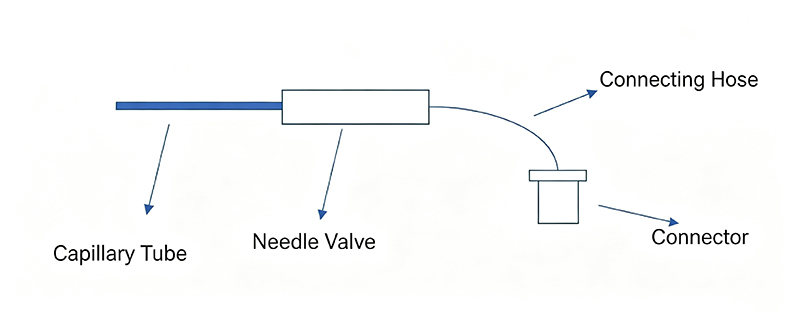
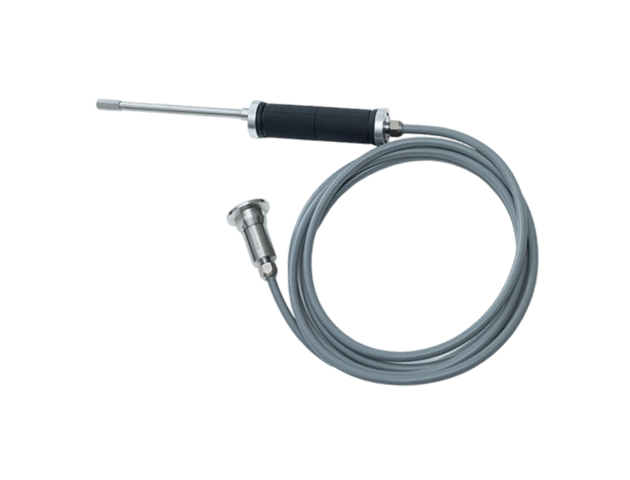
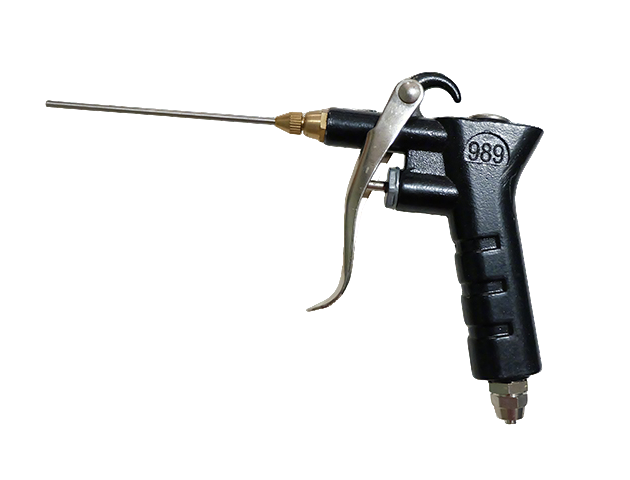
The sniffer probe is a specialized tool for leak detection using the sniffing method with a helium mass spectrometer leak detector. It mainly consists of an adjustable needle valve, a capillary suction tube, a filter disc, a connecting hose, and fittings. The connecting hose is available in lengths of 3 m, 5 m, or longer, depending on the size of the workpiece under test and the accessibility of the leak detector to the workpiece. A longer hose results in a longer response time; for a 3 m hose, the response time is approximately 2 seconds. During operation, the connector is attached to the leak test port of the helium mass spectrometer leak detector. With the needle valve properly adjusted, the leak test port can maintain a normal operating pressure of approximately 5 Pa while continuously drawing in air. By moving the sniffer probe over the surface of a workpiece pressurized with helium, any helium leaking from the test space can be drawn in. Leak rates greater than 10⁻⁶ Pa·m³/s can be easily located. Detecting smaller leaks requires more careful operation. The sniffer probe can also be used to draw in helium-containing air for relevant adjustments of counter-flow leak detectors.
Currently, when using a helium mass spectrometer leak detector with the pressurization method, a sniffer probe is essential. It is connected to the leak detector and the gas flow is adjusted to achieve normal leak detection status. The test container is pressurized with helium to several atmospheres. During leak testing, the sniffer nozzle is moved along the area under inspection. When no leak is present, only a small amount of air is drawn into the mass spectrometer through the sniffer nozzle. When a leak is encountered, helium from the container escapes through the leak path and is drawn into the mass spectrometer by the sniffer, causing the instrument reading to increase. This allows identification of both the leak location and its magnitude. Applying mass spectrometry leak detection to pressurized containers significantly improves product quality. In recent years, the growing demand for leak testing of high-pressure vessels has extended helium mass spectrometer leak detection technology into many technical fields, and the sniffer probe has consequently become a key accessory.
The sniffer probe is a specialized tool for leak detection using the sniffing method with a helium mass spectrometer leak detector. It mainly consists of an adjustable needle valve, a capillary suction tube, a filter disc, a connecting hose, and fittings. The connecting hose is available in lengths of 3 m, 5 m, or longer, depending on the size of the workpiece under test and the accessibility of the leak detector to the workpiece. A longer hose results in a longer response time; for a 3 m hose, the response time is approximately 2 seconds. During operation, the connector is attached to the leak test port of the helium mass spectrometer leak detector. With the needle valve properly adjusted, the leak test port can maintain a normal operating pressure of approximately 5 Pa while continuously drawing in air. By moving the sniffer probe over the surface of a workpiece pressurized with helium, any helium leaking from the test space can be drawn in. Leak rates greater than 10⁻⁶ Pa·m³/s can be easily located. Detecting smaller leaks requires more careful operation. The sniffer probe can also be used to draw in helium-containing air for relevant adjustments of counter-flow leak detectors.