



Working Principle of Helium Mass Spectrometer Leak Detector
Publishdatea:2019-09-26 Views:267
There are typically two leak detection methods for helium mass spectrometer leak detectors: conventional leak detection and reverse diffusion leak detection. The principle of reverse diffusion is shown in the figure. In reverse diffusion leak detection, the test piece is connected to the inlet port of the turbomolecular pump. Helium that has leaked in flows from the outlet port of the turbomolecular pump, against the pump's exhaust direction, into the mass spectrometer tube installed at the inlet port for detection. This detection method is designed based on the principle that turbomolecular pumps have different compression ratios (the ratio of outlet pressure to inlet pressure) for gases of different molecular weights, meaning that different gases exhibit varying degrees of reverse diffusion.
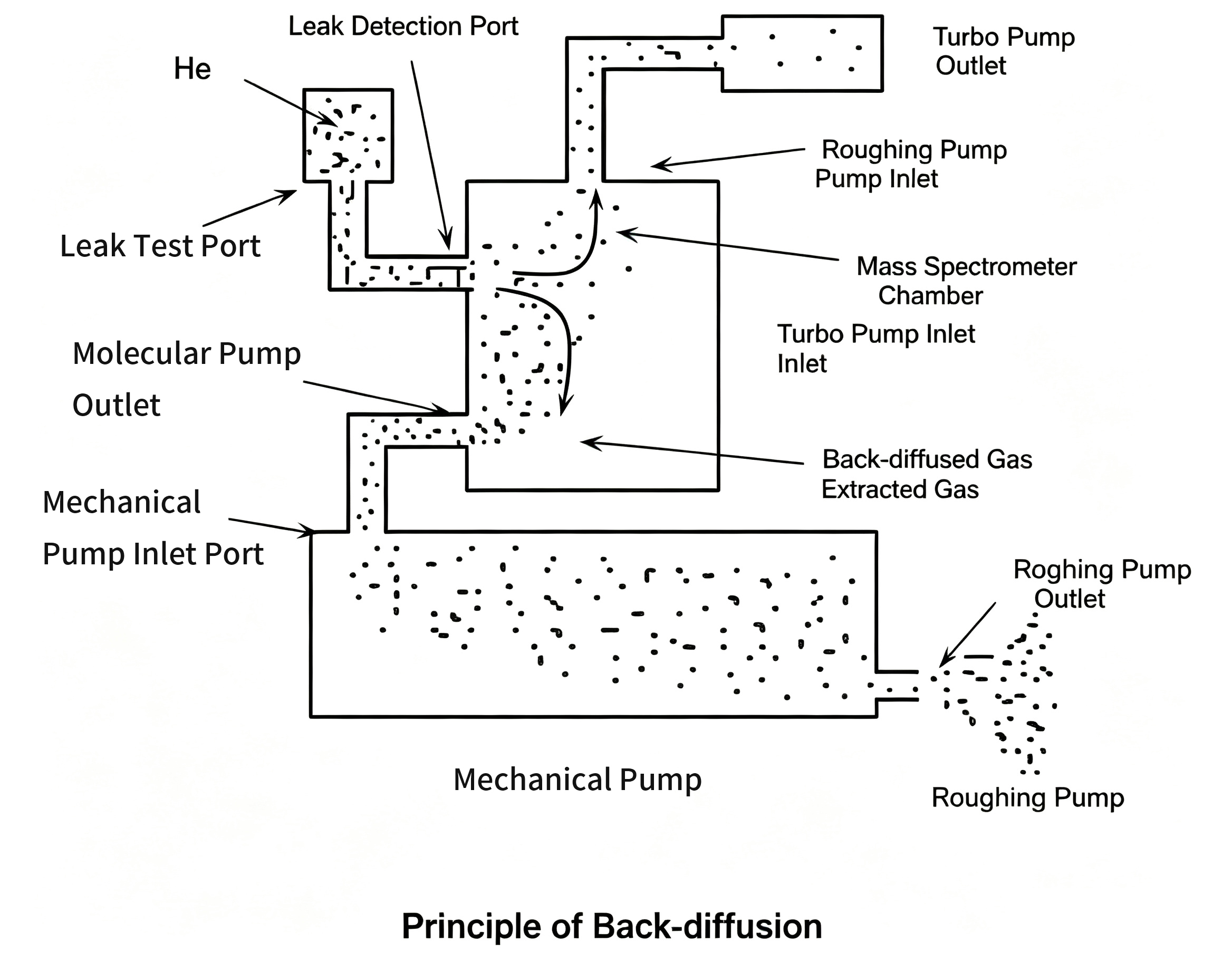
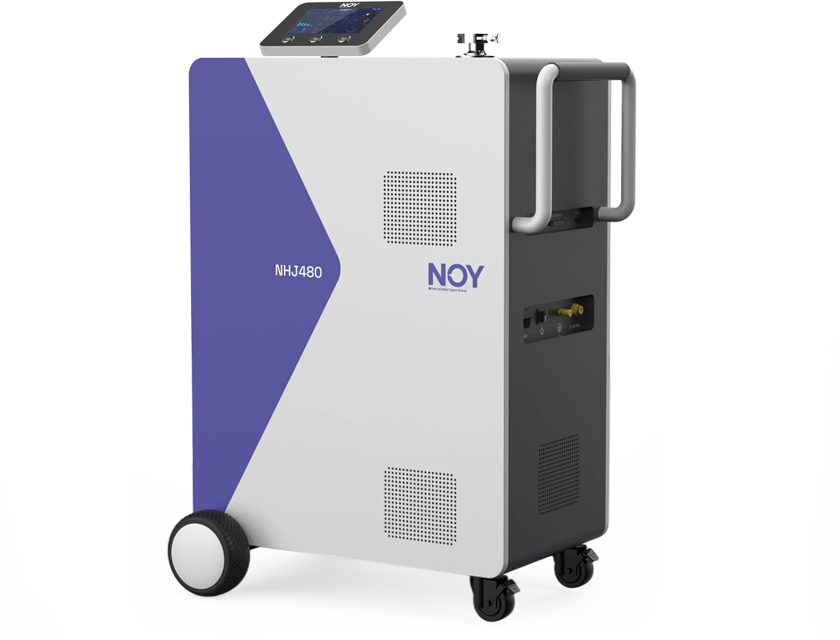
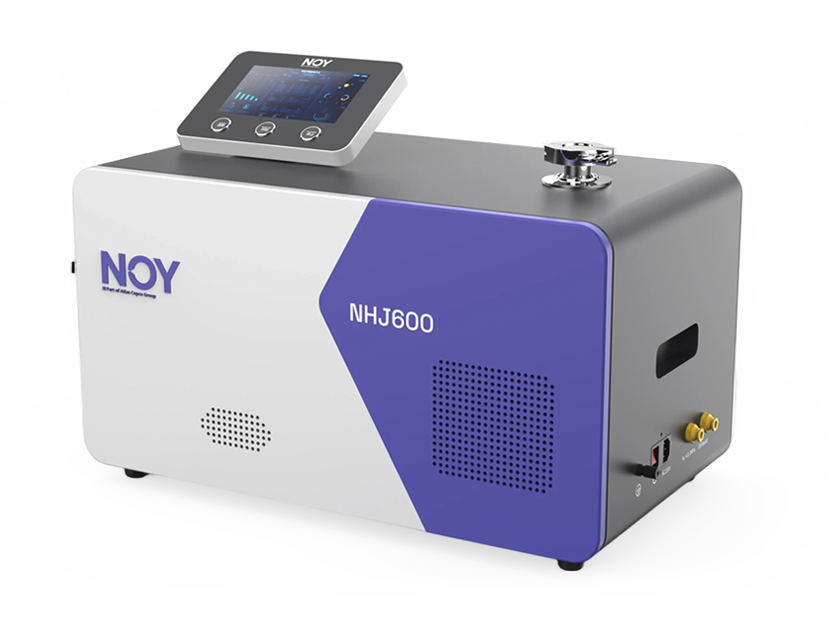
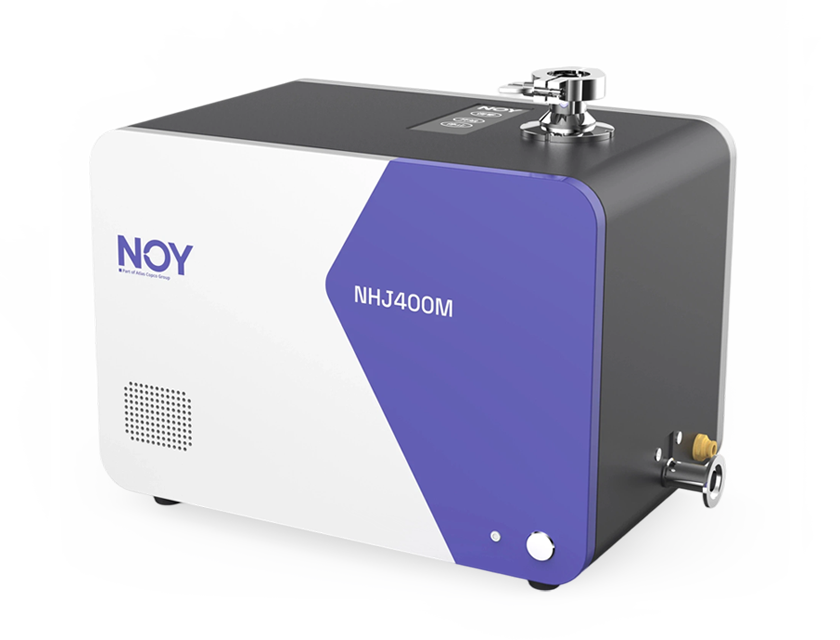
Reverse diffusion leak detection allows a higher internal pressure in the test piece. The NHJ400/600 series helium mass spectrometer leak detectors can operate at test port pressures up to 1000 Pa (compared to below 0.05 Pa for conventional leak detectors), making them suitable for testing large vessels or components with large leaks, as well as for sniffer probe leak detection. Reverse diffusion also offers advantages such as reduced contamination of the mass spectrometer tube and extended filament life.
There are typically two leak detection methods for helium mass spectrometer leak detectors: conventional leak detection and reverse diffusion leak detection. The principle of reverse diffusion is shown in the figure. In reverse diffusion leak detection, the test piece is connected to the inlet port of the turbomolecular pump. Helium that has leaked in flows from the outlet port of the turbomolecular pump, against the pump's exhaust direction, into the mass spectrometer tube installed at the inlet port for detection. This detection method is designed based on the principle that turbomolecular pumps have different compression ratios (the ratio of outlet pressure to inlet pressure) for gases of different molecular weights, meaning that different gases exhibit varying degrees of reverse diffusion.
Reverse diffusion leak detection allows a higher internal pressure in the test piece. The NHJ400/600 series helium mass spectrometer leak detectors can operate at test port pressures up to 1000 Pa (compared to below 0.05 Pa for conventional leak detectors), making them suitable for testing large vessels or components with large leaks, as well as for sniffer probe leak detection. Reverse diffusion also offers advantages such as reduced contamination of the mass spectrometer tube and extended filament life.